
Everyone’s racing to get AI to “automate insights” right now. But honestly, after sitting through too many quarterly business reviews where everything looked flawless on paper, I’m starting to wonder if we’re missing the point.
When Data Lies
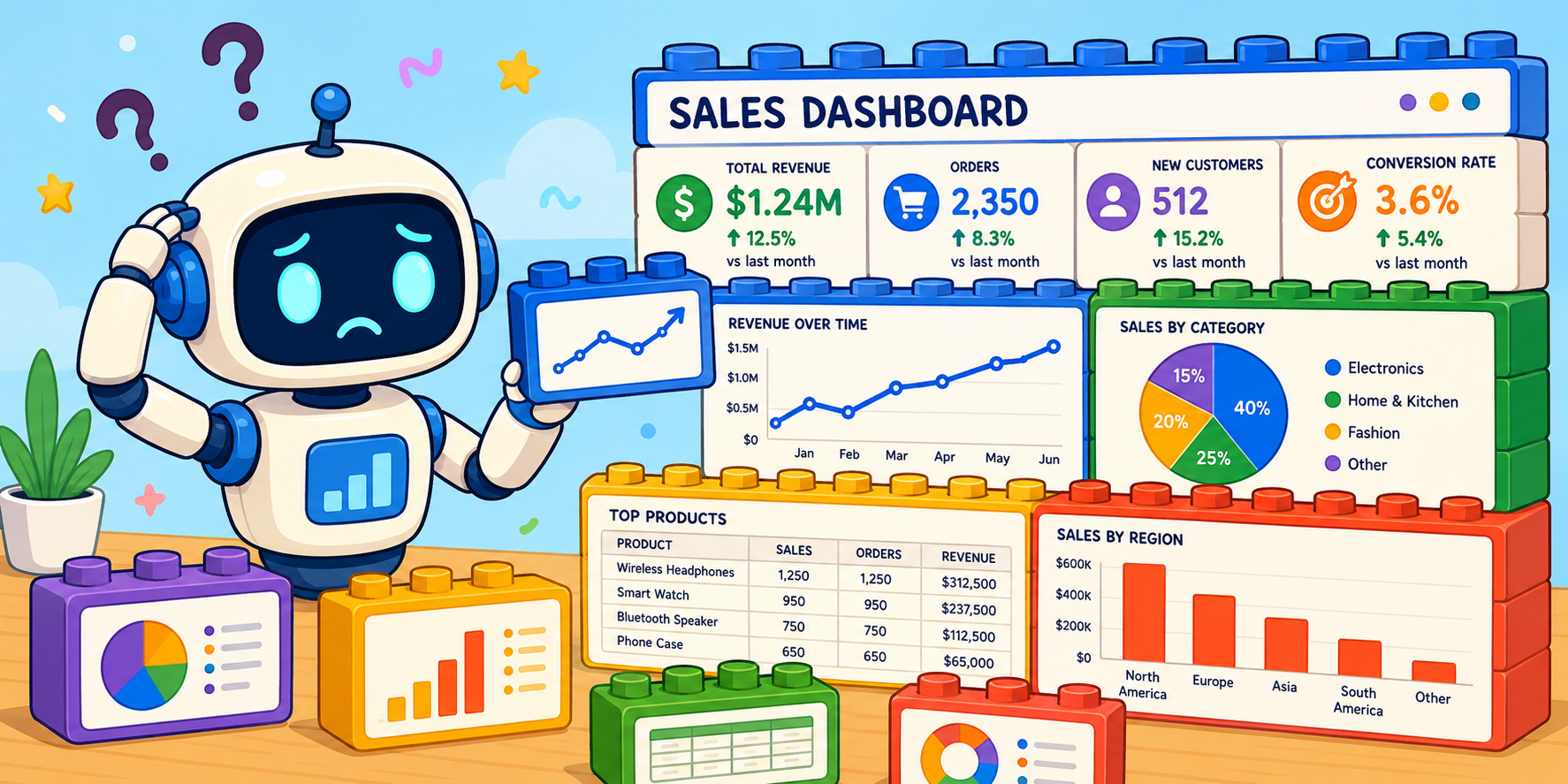
One meeting really sticks with me. The numbers lined up. Dashboards looked slick, data was solid, nobody argued over metrics. Revenue was up—nice. But all that growth came from just two big accounts. Activation rates dropped, but really only in one segment. Sales cycles dragged out, even though the pipeline looked fuller than ever. Every dip or spike had a tidy explanation, and every explanation had a perfectly reasonable counterpoint.
We didn’t lack data. We just didn’t trust what it was really telling us.
The Human Middleman Problem
I’ve seen this play out over and over building analytics teams. We’ve spent tons of energy making data easier to get—better pipelines, slick BI tools, semantic layers, catalogs, the works. Sure, all that’s needed. But just having access doesn’t magically clear things up. Modern companies are buried in context.
Right before a big exec review, analysts lose their minds just getting the basics straight: pulling the right numbers, double-checking they match finance, validating every filter, slicing by segment, hunting anomalies, building narrative decks, then reworking everything when someone says, “wait, that doesn’t look right.” By the time the meeting rolls around, most of the brainpower’s already spent just describing what happened.
Whenever people talk about AI in analytics, they love to imagine the flashy stuff—auto-generated insights, prescriptive recommendations. But honestly, the real win isn’t glamorous. It’s cutting down the grunt work it takes to get a solid descriptive foundation. If AI can reliably summarize trends, flag real outliers, and connect the dots across segments—without making things up—suddenly teams spend less time assembling context and more time actually digging into it.
Why AI Can Be Risky Guessing Why
Things get tricky when you try to figure out why something happened. Saying what happened is pretty straightforward. Finding the cause? That’s a mess. It takes knowing the company history, getting input from different teams, and a true feel for how choices are made.
SaaS Story: The Retention Disaster
I was working with our growth team, and I noticed that our 30-day retention rate for a key feature dropped a lot in one week. A tool that tries to automatically guess the problem would have said there was something wrong with the product or experience, maybe pushing the team to rush and change how things look.
But the real problem? The marketing team started a big free trial campaign on a social site targeting the wrong people. We got tons of people who were never going to buy our product. The tech wasn’t bad; we were showing it to the wrong audience.
If an AI said People Hate the Product, the tech team would have wasted time chasing a fake problem. That’s why AI has to be a helper—pointing out things like how retention relates to where new leads come from, but letting the people who know marketing figure out the real cause.
Setting Limits: AI as Helper, Not All-Knowing
To me, ethical AI means drawing that line clearly. AI should help spark new hypotheses, surface patterns to investigate, maybe point out angles nobody’s thought of. But it shouldn’t pretend to deliver the truth about why things happened. It needs to stay in “assistant” mode, always built on top of well-governed, versioned, clearly defined metrics.
Governance isn’t optional—it’s the whole deal. When I pushed hard for data catalogs and adoption, the real breakthrough wasn’t fancier tools. It was trust. Trust that “monthly active users” meant the same thing in marketing, product, and finance. Trust that you could see who changed what, and when. Without that, analysts end up as human middleware, arguing definitions during meetings. If you drop AI on top of messy semantics, you don’t get speed. You get fast, confident confusion. If ARR has three definitions floating around, the model doesn’t pick the “right” one—it just averages them into nonsense.
Changing How We Use Analysis
The goal isn’t to replace analysts—it’s to let them do the job they actually want. Cut the drudgery, give some structure to the investigative work, and suddenly analysts become editors of context: challenging assumptions, testing weak signals, and turning messy data into something leaders can actually use.
And here’s something funny I noticed where self-serve analytics actually caught on (not just in theory, but for real): people didn’t ask fewer questions. They asked sharper, more forward-looking ones. The conversation shifted from defensive “what happened?” to “given where this is going, what do we need to adjust?” That’s the real prize.
Final Word: Keep Calm and Analyze
At the end of the day, analytics isn’t about making dashboards look fancier or tossing out clever-sounding auto-reports that don’t mean much. What really matters is confidence—knowing the signal’s real, the definitions make sense, and you understand the drivers well enough to actually put money on the line.
Sure, AI can help clear mental clutter, pull together context fast, and tidy up the way we explore ideas. That’s great. But you can’t let it squeeze out human judgment or dodge real responsibility. Strategy isn’t just what pops out of a model. It’s a bet—one you make in the middle of uncertainty. Data points the way, but people still have to pick a direction and move.
So aim AI at the right stuff—clearer descriptions, sharper diagnostics. Do that, and analytics doesn’t just get quicker. It gets calmer. And in a big, messy company, that kind of calm is often what finally gives leaders the confidence to act.
Maybe it’s time to stop chasing “automated insights” as the gold standard. What we really need is steady, confident decision-making. That’s the bar.
Author: Snehal Karanjkar